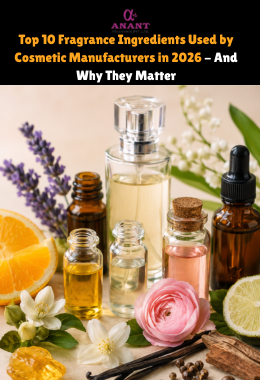
The fragrance ingredients cosmetic manufacturers are reaching for in 2026 are not the same ones that worked five years ago. Regulatory pressure, skin sensitivity concerns, and consumers actually reading labels have forced a real rethink – and the ten that survived that rethink are musk, sandalwood, rose absolute, ISO E Super, hedione, linalool, benzyl alcohol, ambroxan, citronellol, and vetiver.
Nisha works in product development at a personal care company in Kannauj. In late 2024, a batch of her team’s body wash failed a routine EU allergen audit because one fragrance ingredient – something they had used for seven years without a single complaint – crossed a newly revised threshold. Reformulating that one SKU pushed back the Europe launch by five months and cost the company more than they had budgeted for the entire fragrance development cycle that year.
What Fragrance Ingredients Are Cosmetic Manufacturers Actually Prioritising in 2026?
Cosmetic manufacturers are prioritising fragrance ingredients that pass IFRA compliance, clear EU allergen thresholds, and still perform well on skin after rinse-off or in leave-on formats. That is a narrower list than it used to be.
Three years ago, the conversation was mostly about natural versus synthetic. Today it is about which ingredients can survive export compliance across three different regulatory frameworks at the same time – EU, GCC, and BIS. Cosmetic manufacturers who have not audited their fragrance ingredients list against all three are sitting on a reformulation problem they have not found yet.
Looking for reliable Cosmetic Fragrance Manufacturer? Explore how experienced Cosmetic Fragrance Manufacturer help brands develop IFRA-compliant, export-ready fragrances that meet evolving global regulations while maintaining performance and consumer appeal.
Which 10 Fragrance Ingredients Do Cosmetic Manufacturers Depend On Most Right Now?
These ten fragrance ingredients show up in the majority of cosmetic manufacturers’ formulations in 2026 – across body care, hair care, skincare, and personal hygiene.
- Synthetic White Musk: Still the most-used base note in the industry. Cosmetic manufacturers add it to give products that clean, skin-close scent that consumers associate with freshness. Hard to replace because nothing else does exactly what it does at that price point.
- Sandalwood – Natural and Synthetic: Mysore sandalwood extract and synthetic Amyris-based alternatives both run in premium formulations. Indian cosmetic manufacturers use sandalwood more than almost any other base note in export personal care.
- Rose Absolute: Bulgarian and Turkish rose absolute costs more per kilo than most cosmetic manufacturers are comfortable with. But at 0.05% to 0.1% in a formulation, it delivers a softness that no synthetic fully replicates. Luxury skincare brands still pay for it.
- ISO E Super: ISO E Super is woody and cedar-like, but its real job is amplification. Cosmetic manufacturers use it to make other fragrance ingredients project further without increasing total fragrance load. Common in men’s grooming and premium hair care.
- Hedione: Hedione gives body washes and shampoos a fresh jasmine lift that blooms under heat and water. Cosmetic manufacturers running high-volume shower product lines use it specifically because it performs in rinse-off formats where many fragrance ingredients simply disappear.
- Linalool: Linalool sits in nearly every floral and fresh fragrance formulation on the market. It comes naturally from lavender and coriander, which helps with natural-positioning claims. The catch – EU rules now require it declared on pack above 0.001% in leave-on products. Cosmetic manufacturers need to check their concentrations before the next label print run.
- Benzyl Alcohol: Benzyl alcohol does two jobs – mild floral scent contribution and preservative function in some water-based formulations. Cosmetic manufacturers working on multifunctional ingredient lists like it for exactly that reason.
- Ambroxan: Ambroxan is the fragrance ingredient that changed modern perfumery. Skin-warming, long-lasting, effective at very low concentrations. Cosmetic manufacturers use it in prestige body care and hair fragrance products where longevity on skin matters to the consumer.
- Citronellol: Citronellol gives rose and geranium-type florals their natural roundness. Cosmetic manufacturers building natural-positioned products use it to bridge natural extracts and synthetic base structures without making the formula smell obviously synthetic.
- Vetiver: Indian vetiver – sourced from Rajasthan and exported globally – has been gaining ground as a differentiator in export formulations. Cosmetic manufacturers in Gujarat and Mumbai are increasingly specifying Indian vetiver in masculine and unisex product lines specifically because of its origin story with international buyers.
Why Do These Fragrance Ingredients Matter More to Cosmetic Manufacturers Today Than Five Years Ago?
Fragrance ingredients matter more now because the cost of getting them wrong has gone up – not just in regulatory fines but in reformulation time, delayed launches, and consumer trust once a recall or allergen notice goes public.
The EU expanded its mandatory allergen declaration list. The GCC follows its own restricted substances framework. India’s BIS rules are tightening. A fragrance ingredients decision made in 2026 needs to survive all three markets – and cosmetic manufacturers who treat fragrance as an afterthought in formulation are the ones getting caught out.
If you’re developing products for multiple markets, partnering with a reliable Body Wash Fragrance Manufacturer can help ensure your fragrance formulations are designed with evolving global compliance requirements in mind while maintaining consistent product performance.
How Do Cosmetic Manufacturers Decide Between Natural and Synthetic Fragrance Ingredients?
Cosmetic manufacturers decide between natural and synthetic fragrance ingredients based on four things: the product’s market positioning, the target export market’s regulatory framework, batch-to-batch consistency requirements, and the cost ceiling the brand has approved.
| Factor | Natural Fragrance Ingredients | Synthetic Fragrance Ingredients |
| Cost per kg | High, varies with harvest | Stable year-round |
| Batch consistency | Changes by season and origin | Identical batch to batch |
| Allergen risk | Natural allergens present | Controlled and measurable |
| Consumer positioning | Strong in premium and organic claims | Standard across the mass market |
| Regulatory compliance | Mostly compliant, origin-dependent | Molecule-specific – check IFRA |
| Longevity on the skin | Shorter in some extracts | Better in most synthetics |
Most cosmetic manufacturers running hybrid lines use a natural extract at the top for the consumer-facing story and synthetics through the mid and base for consistency and performance.
What Fragrance Ingredients Are Cosmetic Manufacturers Removing From Formulations in 2026?
Cosmetic manufacturers are actively removing isoeugenol, HICC, Lyral, and uncontrolled oakmoss absolute from formulations – not because they smell bad, but because leaving them in creates labelling obligations, restricts export options, and increases allergen complaint risk.
Some of these were removed from major fragrance houses’ active palettes years ago. But smaller cosmetic manufacturers still using older fragrance compounds supplied by regional vendors may be carrying them without realising it. An ingredient audit before the next production batch is not optional – it is overdue.
Fragrance ingredients that cosmetic manufacturers are phasing out:
- Isoeugenol – IFRA Category 4 restricted, common sensitiser
- HICC – banned in EU leave-on products since 2021
- Lyral – removed from most compliant fragrance house palettes
- Oakmoss and treemoss absolute above IFRA threshold levels
- Nitro musks, including musk ambrette, are restricted across multiple markets
Where Do Indian Cosmetic Manufacturers Source Reliable Fragrance Ingredients?
Indian cosmetic manufacturers source fragrance ingredients from Kannauj for natural attars and botanicals, from Mumbai and Ahmedabad for synthetic aroma chemicals, and increasingly from specialist fragrance houses offering compliance-documented supply.
Kannauj remains India’s deepest natural fragrance sourcing hub – rose water, vetiver, kewra, and traditional attars all come out of there. For synthetic molecules and IFRA-documented raw materials, suppliers in Mumbai and Ahmedabad cover most of what cosmetic manufacturers need domestically.
For brands that want both raw material supply and custom fragrance development under one roof, anantfragrance.in works directly with cosmetic manufacturers on compliance-ready formulations, which cuts down the back-and-forth between fragrance development and regulatory sign-off considerably.
FAQ: Fragrance Ingredients for Cosmetic Manufacturers
Q1. Which single fragrance ingredient do cosmetic manufacturers use most in 2026?
Synthetic white musk. It runs across body care, hair care, and personal hygiene at higher volumes than any other base note in the industry.
Q2. Do Indian cosmetic manufacturers need to declare fragrance ingredients on labels?
BIS rules allow collective declaration as “fragrance” for India. EU export requires individual allergen disclosure above set concentration thresholds – check both before printing labels.
Q3. How do cosmetic manufacturers verify a fragrance ingredient’s IFRA compliance?
By requesting a current IFRA compliance certificate from the fragrance supplier for the specific application category – rinse-off, leave-on, or lip product.
Q4. What is the difference between a fragrance ingredient and a finished fragrance compound?
A fragrance ingredient is a single raw material like linalool or ambroxan. A fragrance compound is a perfumer’s blend of multiple fragrance ingredients combined into one ready-to-use formula.
Q5. Can smaller cosmetic manufacturers afford rose absolute and other expensive natural fragrance ingredients?
Yes, at the right usage level. Rose absolute at 0.05% in a body lotion delivers recognisable character at a fraction of fine fragrance cost – the formulation skill is knowing how little you actually need.
Follow us on Facebook and Instagram for more inspiration and product news.