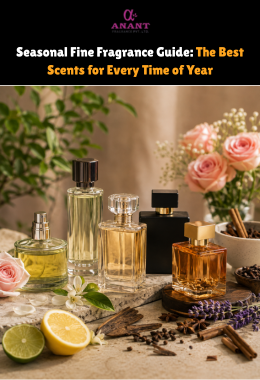
A good Seasonal Fine Fragrance Guide comes down to one idea: light and citrusy in summer, warm and spicy in winter, floral in spring, and woody or musky through the monsoon and autumn months. Temperature and humidity change how a scent behaves on skin, which is exactly why the same perfume can smell completely different in July compared to December. Here’s how to actually match fragrance to season, month by month.
Why Does a Seasonal Fine Fragrance Guide Even Matter?
Heat and humidity intensify a fragrance, while cold air holds it closer to the skin and slows down projection. A perfume that feels perfect on a cool evening can turn overwhelming under a hot afternoon sun, and that shift in behaviour is the whole reason a proper guide exists.
Skin chemistry also reacts differently across seasons. Warmer months bring more natural body oil, which pushes top notes forward faster. Cooler months let base notes settle in and linger for hours instead of fading quickly.
What Should a Seasonal Fine Fragrance Guide Recommend for Summer?
Light, citrus-forward scents work best once the heat sets in, and any Seasonal Fine Fragrance Guide worth following will say the same. Anything heavy or overly sweet tends to feel cloying rather than pleasant once temperatures climb past a certain point.
- Citrus and bergamot notes for a fresh, clean opening
- Aquatic or marine accords that mimic cool water
- Light green notes that feel crisp rather than heavy
- Lower concentration formulas that won’t overwhelm in the heat
A well-built Seasonal Fine Fragrance Guide always treats summer as the season for restraint, not intensity.
Which Fragrance Families Suit Spring the Best?
Floral and green notes fit spring naturally in any Seasonal Fine Fragrance Guide, since they echo what’s actually blooming outside during that period. This is usually the easiest season to shop for, since so many fragrance houses lean floral by default this time of year.
Rose, jasmine, and peony tend to dominate spring collections, often paired with a soft green undertone that keeps things from turning too sweet. A good Seasonal Fine Fragrance Guide treats spring as a transition season, easing away from heavy winter scents toward something lighter.
How Should a Seasonal Fine Fragrance Guide Handle Monsoon and Autumn?
Musky and woody notes hold up best once humidity rises and air turns damp, which is why they anchor this part of the Seasonal Fine Fragrance Guide. Light citrus scents tend to fade quickly in monsoon air, while musk and soft woods stay grounded and consistent through wet weather.
- Sandalwood and cedar for a warm, grounded base
- Soft musk that doesn’t get lost in humid air
- Amber accords that add depth without heaviness
- Subtle spice notes that build slowly through the day
Autumn shifts things slightly warmer as temperatures drop, making room for a touch more richness in the blend.
What Works Best in a Seasonal Fine Fragrance Guide for Winter?
Warm, spicy, and oriental notes dominate winter recommendations in every Seasonal Fine Fragrance Guide, and for good reason. Cold air slows evaporation, letting deeper notes like vanilla, amber, and spice unfold gradually across several hours instead of disappearing within minutes.
| Season | Recommended Notes | Ideal Concentration |
| Summer | Citrus, aquatic, green | Lighter (EDT) |
| Spring | Floral, soft green | Light to medium |
| Monsoon/Autumn | Musk, wood, amber | Medium |
| Winter | Spice, oriental, vanilla | Richer (EDP/Parfum) |
Looking at this table, the pattern in a Seasonal Fine Fragrance Guide becomes clear. Concentration and warmth both climb as temperatures drop through the year.
How Does Fragrance Concentration Fit Into a Seasonal Fine Fragrance Guide?
Higher humidity calls for lighter concentrations, while cold, dry air can support richer formulas without becoming overpowering. Eau de toilette suits summer well, since it projects less and fades faster in heat. Eau de parfum or pure parfum suits winter better, holding onto scent for longer stretches in cold, dry conditions. Matching concentration to season is just as important as matching the actual notes.
Where Can Buyers Find Fragrances Suited to Every Season?
Buyers looking to build a rotation across all four seasons should explore a curated fine fragrance collection rather than relying on a single signature scent year-round. A well-stocked range at anantfragrance.in of fine-fragrance makes it easier to shop by season instead of guessing.
Following a Seasonal Fine Fragrance Guide this way keeps a wardrobe of scents relevant no matter what the calendar or the weather outside says.
Frequently Asked Questions
1. Why do fragrances smell different in summer versus winter?
Heat speeds up projection and fading, while cold air slows evaporation and lets deeper notes last longer.
2. What is the best fragrance concentration for hot weather?
Eau de toilette usually works best, since it feels lighter and doesn’t overwhelm in heat.
3. Are floral scents only suitable for spring?
No, but they suit spring best, since lighter floral blends match the season’s mood naturally.
4. Should monsoon fragrances be stronger or lighter?
Slightly stronger, since humidity can wash out light citrus notes faster than usual.
5. Can one fragrance work across all seasons?
It can, but rotating scents by season usually gives better performance and a more fitting mood each time.
Follow us on Facebook and Instagram for the latest fragrance trends, seasonal scent tips, and fine fragrance updates.